


Here is some exciting news.
This July, I am starting a new journey. I have joined a fitness club!
This is something I have been looking forward to since the beginning of the year.
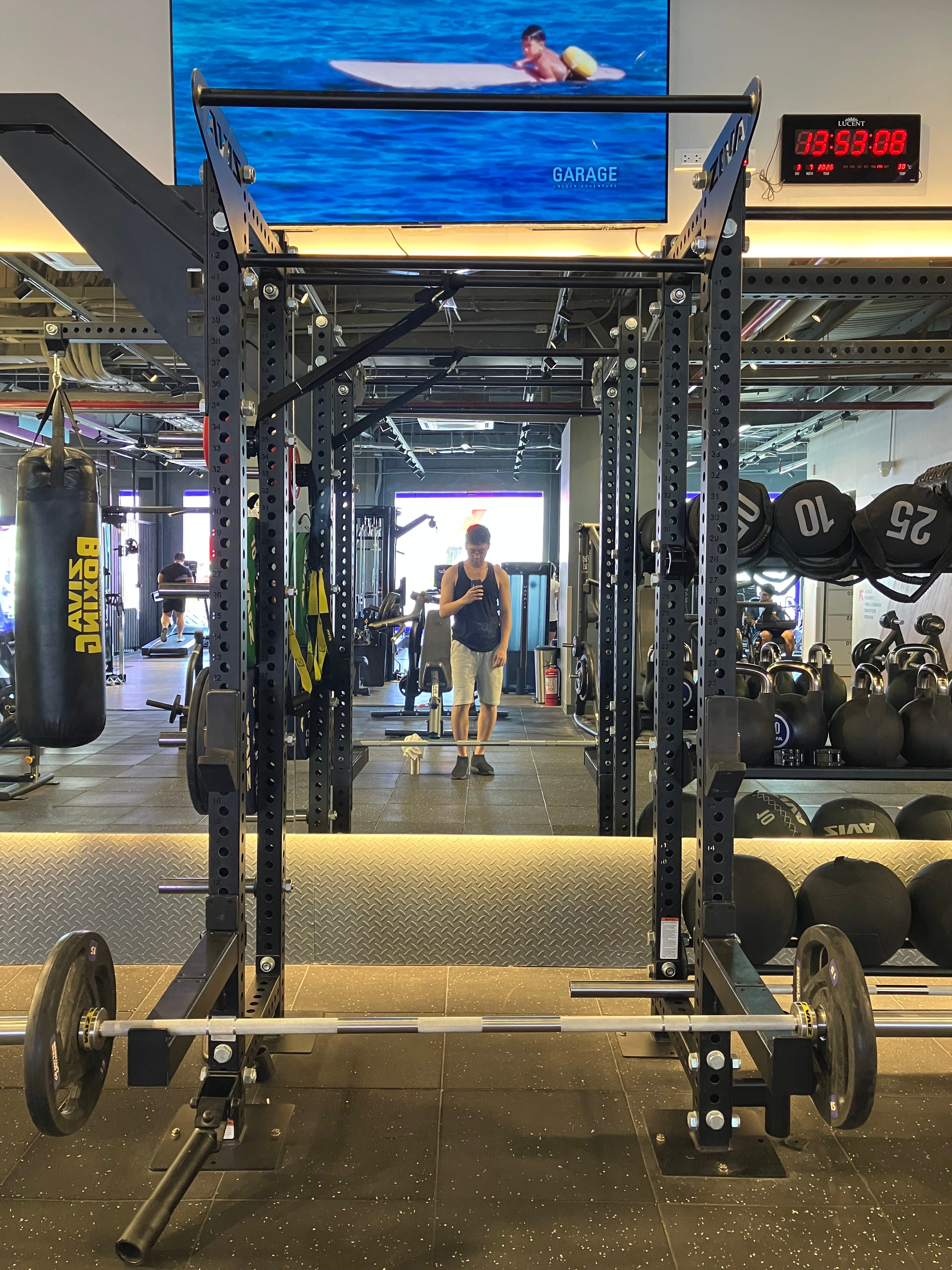
I have some big reasons for doing this, if you have been reading my newsletter for a while, you already know why. If you are new in this newsletter though, it is mostly about the future. I want to enjoy the results of all the hard work I am putting into building Explore to Thrive today.
Yes, as business builders, we must make sure to take care of our health so we can enjoy the fruits of our labor when we finally reach our goals. We should put our income toward what matters most rather than spending it all on hospital bills and medicine.
Personally, I am getting serious about my fitness because I feel like I am losing my figure. I am packing on extra fat due to a slowing metabolism, and it is really hitting my confidence.
I can feel it pressing against my abdomen, and it serves as my daily reminder to change my lifestyle. 🤣
Another reason I joined a gym is because I am feeling pretty lonely lately. Honestly, I have given up on searching around our city for other creators who are building an online business like I am.
I have been running blogs and niche sites solo for over five years, and it is honestly pretty isolating.
(Do you ever feel lonely working on your business by yourself? You are definitely not alone. I am happy we could connect through this newsletter!)
But yeah, in a gym, I could have a gym buddy who shares my goals, and that would definitely help with the isolation I am feeling.
So what is the goal in joining a fitness club?
My focus is on my arms and legs, and I want them to look bulkier after 12 months. My muscle to fat ratio has to be in a healthy range, too, which means losing my double chin and the fat on my stomach and waist. Most importantly, the results of my comprehensive metabolic panel should have no warnings or negative remarks.
Honestly, I have lost count of how many mornings I have thought about starting this goal. Because, as a creator, I know my productivity is hit or miss depending on my mood.
I could be more productive if my mood is better, which can happen if I am more active physically.
Still, in retrospect, I cannot blame myself for deprioritizing my fitness goals. I had to complete a few projects first and publish a lot of blog posts so that my blog could make money. At the same time, I felt a little shy about working out by myself.
But now that I have published four projects and found a buddy whom I met at a coffee shop, I can no longer make excuses.
It was the last day of June when I walked into the fitness club to sign up. As I sat filling out the registration form, the staff member patiently walked me through the contract, the rules, and the logistics of payment.
We found ourselves chatting about personal details, like where we lived and whether I had family in other parts of town. Then, he started digging into my personal goals for joining and explained why having clear targets makes such a difference.
Honestly, I was caught off guard. I hesitated to answer him, wondering if I should open up about everything, unsure if my list was too ambitious, just right, or perhaps too modest.
Anyway, my answer to his question about my gym goals was similar to what I mentioned earlier, though not verbatim.
Indeed, it was the moment I once again realized how important goals are. Goals play a big role in everything that involves building. Whether it is your body or your business, you need a goal to make significant progress and see returns.
Remember the Nelson Mandela quote I shared in my last newsletter?
“Action without vision is only passing time, vision without action is merely daydreaming, but vision with action can change the world.”
Goals will give you a clear direction to focus on, and that will change everything. It will save you time, money, energy, and even your attention.
As a creator building an online business, it has become my personal mantra to create content, products, and services around one ultimate goal.
I explained everything about it in my previous newsletter, but in summary, it is key to generating unlimited content, it will help in building an audience, and most importantly, it will help you grow your business sustainably.
But what if you do not have a clue yet about what goal to go after?
What if you want to do so many cool things but you cannot decide which one to pick?
There is no easy answer. But usually, there are plenty of ways to figure out your ultimate goal. What worked for me was a simple three-step process: explore, introspect, and assess.
Let me break down each part for you.
Explore
To me, the first step in finding that ultimate goal is exploration.
But I have to tell you honestly, finding my ultimate goal was not my intention for most of the exploration I did. The actual exploration took years before I even decided to have an ultimate goal for my online business.
That said, once I realized that I needed a goal for my business, the experience I gained during those years of exploration immediately came in handy.
Why? How? Consider this: One massive part of my ultimate goal is freedom.
Freedom, not in the traditional sense that is the opposite of slavery, but freedom in which I am free to do anything or go anywhere, anytime I like. No boss to tell me what to wear, when to work, how to behave, or where to stay for eight hours a day.
Actually, that is not the main point; this is: freedom in a sense that I can spend time with my family and the people I value the most for as long as I can.
And for as long as I can remember, I would not have really gotten how important that kind of freedom is if I had not spent time exploring.
A big part of that was traveling. When I traveled, I realized that life is too short to spend my whole life stuck in an office.
Traveling gave me the idea that I must find a way to own my time completely so I can be free to see the beauty this world has to offer.
Basically, you have to get out there and explore to see what you are actually into.
You really need to try stuff out because experiencing it for yourself is the only way to know if you are into a hobby, a skill, or a certain lifestyle, which helps you pick which goal to chase.
I should mention, though, that I did a lot of other exploring, too, especially when it came to the philosophy of life. I read books like Tuesdays with Morrie and The Alchemist. I also checked out self-improvement sites, like Mark Manson’s blog.
I even picked up new skills, like taking a photography class and messing around with the guitar. The list also includes technical stuff like web design, SEO, and affiliate marketing, which all helped me figure out what goal to go after.
Introspect
When deciding on your main goal for your business, your interests and motivation just aren’t enough. Interests change and motivation goes up and down.
We need our goals to match who we are.
That way, working toward them feels natural and easy, which helps us stay consistent.
For this part, what worked for me was doing a ton of self-reflection. I literally spent a whole month on it.
I looked into my strengths, my weaknesses, the values I stand for, and most importantly, why I am even working on this goal to begin with.
(I actually turned them into blog posts. You can check the about page of my site where I have linked each of them. There are 10 in total.
The best part? The process helped me get to know myself, and honestly, it uncovered something I had been wanting for ages. It is community.
I really want to be around people who have the same goals and are headed in the same direction. That is why if you check out my home page where I talk about my mission and goal, everything is aimed at building a community.
As a takeaway for this step: take some time to figure out the foundation of your main goal. You are going to be working on this for a while, and you need that undying internal drive so you do not burn out along the way.
Assess
Once you have decided on a goal that you are genuinely interested in and know you can stay consistent with, the next step is to evaluate it.
Like, before you commit entirely, one thing you can try is the traditional SMART method to ensure your goal is specific, measurable, achievable, relevant, and timely.
We do not want to waste time and energy on unrealistic goals that feel like a moving target.
We also do not want to chase irrelevant ideas, like building a grammar-checking SaaS to pull in 10k MRR in passive income. Do not go for that because people have moved on to using AI for those tasks.
As a creator, if that is the goal you make the center of your content, you can expect a smaller and less interested audience because it is no longer relevant.
Before I finalized my ultimate goal, I worked hard to make it as relevant as possible. You can do the same by making your goal beneficial not just for yourself, but for others too.
After all, relevance creates value for the world, which is a great way to attract and build an audience.
For example, between a creator who makes content that is only engaging and one who focuses on making a positive impact, it is easy to see who will be forgotten quickly and who people will always remember and come back to.
Lastly, during your assessment, take a moment to look back at what you have done or learned so far. You might find you are already on your way to that goal without even knowing it.
Thank You for Reading
Explore to Thrive Newsletter is part of my personal mission to walk alongside fellow creatives and show that it’s possible to build a sustainable online business from your lived experiences and passion. It’s completely free and open to everyone.
If it resonates with you and you feel inspired to support it, I would be very grateful for a tip. Your support helps me build Explore to Thrive, a community and resource I dream of creating where no creator feels alone and where we can grow, learn, and truly thrive together.
Join Me
First time here? Come join my newsletter and stay in the loop.
I share honest insights from building an online business with a blog from the ground up, lessons from my mistakes so you can avoid wasting time, discoveries that lead to wins, and methods that support long term success as a creator.
Progress Tracker
This section is where I share what I’ve been working on with Explore to Thrive Blog since the last newsletter. My goal is to be transparent about the process. And also to give a real sense of what building a creator business actually looks like.
What did I achieve?
I thought my task would be minor proofreading. It turned out to be more than that as I faced a tedious blog audit.
I began by interlinking pages and posts.
Some posts mentioned products I promote without a link to the affiliate marketing page, which was a missed opportunity to earn money. Other posts mentioned topics I also covered in my blog that lacked links. This meant missing a chance to help readers and establish that my blog is helpful.
Another thing: There were so many external links that did not open in a new tab. That is a mistake. It essentially means you are sending your readers to another website or publication.
On the other hand, if the readers open the link in a new tab, your post stays open in their browser. When the reader finishes checking the page you linked, they can still see your site in their browser. They can continue reading your content, see your promotions, and most importantly build a connection.
Aside from that, I also rearranged the placement of the images in my blog posts. There were a few posts that had images located after the headings. This created a problem. Instead of the readers getting an idea of what the section is about or finding the answer to their question immediately, they saw photos that do not provide any value beyond inspiration.
Another problem I saw during my audit concerns the calls to action. I found some that do not emphasize the specific value the reader would get if they clicked a button or link.
These calls to action told the readers something like this: “click to check out our reality versus expectation experience in this destination.” I replaced them with a version that gave more details with a promise. For example, “I have written another blog post about this destination where I share our experience and tips so you do not make the same mistakes that I did. Check it out!”
If you notice, I added an element of helpfulness and intrigue in the new call to action. That is very important if you want readers to see your other posts or pages.
What is funny is I also found calls to action without actual buttons or links. It must have been frustrating for the reader. 🤦🏻♂️
Another thing I did during the audit is find posts that mentioned other topics and could be linked. For that part, I spent time rewriting paragraphs or writing new ones. I made sure the flow of discussion was not interrupted.
In addition to all those, when I was auditing my Sagada Travel project, I noticed that there were multiple pages for monetization. I was not surprised because I had not thought about having an all in one page for travel planning before.
Anyhow, I merged them into one page. This means I had to update all the links in other posts so every one of them goes straight to the new travel planning page for Sagada. I made sure there are no broken links. That is a bad experience for readers and a negative ranking factor in SEO.
The audit I did also involved updating WordPress’ reusable patterns at the end of each post. They are an easy way to interlink blog posts. Once you put a link into one of the reusable patterns, all the posts containing that reusable pattern will also have that link.
Most of the reusable patterns I edited are for my Sagada Travel project. These reusable patterns had not so compelling calls to action. I had to rewrite them and edit even the buttons.
Speaking of links, I found a couple of blog posts with so many calls to action and links at the end.
Initially, I placed them there to give readers more options to read next. But I realized they might be too much. There were four or five links. The readers may find it hard to choose what to read next. So I removed some of the existing links and retained only those that are very relevant to the topic.
Did I do anything interesting?
It is how I organize my Pinterest content plan.
Before, I would manually copy the blog post title for the pin title, the excerpt for the description, and the URL from my WordPress list into my Apple Notes planning sheet. Then I would pick which day to promote each post on Pinterest and call it a day.
For July, I used AI to make this process much faster and easier.
I copied my WordPress posts page and pasted it into Gemini, and after a few prompts, it was done. The first prompt was as simple as asking to format the details into a table. Then I asked Gemini to improve the titles and descriptions to make them more Pinterest search friendly.
Here are the prompts that I used:
For the title: Act as my Pinterest SEO expert strategist and rewrite the titles I will give you to optimized them for my pins by adhering to these requirements. Start every title with a relevant high-volume keyword to ensure it is immediately searchable. Keep each title between 50 and 100 characters in length to maintain visibility across all devices and feeds. Craft descriptive and clear text that informs the user exactly what to expect while including an engaging hook to encourage clicks. Use keywords naturally within the sentence structure to avoid stuffing and ensure high readability. Include keywords that align with my content and images to maintain metadata consistency. Your revision must be listed without numbers and without bullets. Here are the titles to rewrite:
For the description: Act as my Pinterest SEO expert strategist. Please rewrite my draft pin descriptions by prioritizing natural language that avoids keyword stuffing and focusing on specific search intent to build trust, while ensuring the most relevant keywords and the primary hook appear in the first sixty characters to account for truncated feed views. Incorporate a clear structure that begins with a compelling hook addressing a specific problem, follows with a value proposition that highlights unique benefits or outcomes, and concludes with a direct call to action to read the blog post Refrain from using hashtags or dashes. Here are the descriptions to rewrite:
I avoided processing all the information at once because I am using the free tier with limited compute resources. When I tried to process all the titles and descriptions for the entire month, the results were poor. So I processed them week by week, which is why there are two prompts.
Did I run into any problems before this letter?
Before I started creating pins, I noticed my 2:3 ratio pins did not perform well compared to my 1:2.1 pins, which Pinterest cropped when I uploaded them.
So for July, I tried to create a new template with a shorter 1:2 ratio as mentioned in some blog posts I researched. After I created the template and the pins for each post and tried to upload and schedule them, a problem happened. The app still cropped the 1:2 pins and that made me felt very frustrated because I had no choice but to update the pins after all the effort I made.
However, before I updated the template, I first checked what the accepted ratio is. I now doubt whatever is on the internet so I manually tested what works and what does not. From my testing, I learned that the tallest pin the Pinterest app accepts has a ratio of 9:16.
All this explains why if you check my Pinterest account, there have been no pin updates for days now.
What do I plan to achieve next?
My plan from last week remains the same since I only accomplished the audit for posts.
I shall continue with the audit and improvement of Travel Planning Pages. The activity might include rewriting the copies and perhaps adding more affiliate links to more brands. This way, the reader won’t have to go elsewhere to look for the same kind of product or experience for their trusted brand.
After that, I shall proceed to interlinking the projects among their wider scope. For example, I am going to interlink Cebu and Sagada posts. They are all about Philippines travel.
I will also de-index posts that do not have to be indexed. For example, those very personal posts that no one would be searching for.
Once that is done, my plan is adjusting my site’s design for readability and better user experience. I also noticed the low contrast between text and background, especially in the footer. I need to adjust that, too.
Lastly, the quarterly retrospection.
Alright! That’s all for now. I hope you found my notes on tracking progress helpful for the online business you’re building.
Again, thanks for reading, and I’ll see you in the next newsletter!
Ciao.